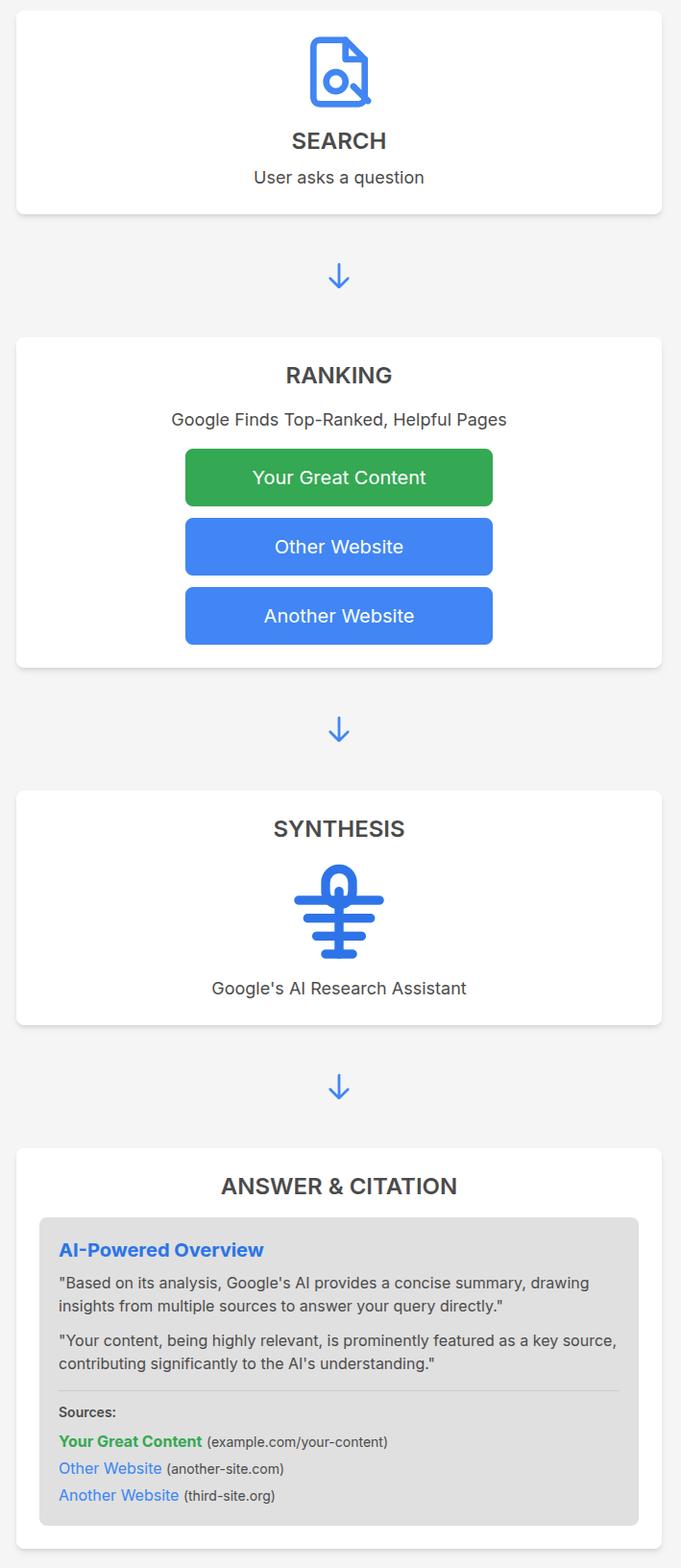
We've been watching Google closely this year, and it's clear their focus has shifted. They're not making big, flashy algorithm announcements. Instead, they're quietly changing how their AI systems read, understand, and rank websites.
This isn't about pretty design. It's about making your site's structure so simple and clear that a machine can instantly tell what you do and why you're trustworthy. The easier your site is for Google's AI to process, the better you'll rank.
Our key takeaway is that Google is rewarding sites that are clean, logical, and built for purpose. Here's what we're seeing in Google’s requirements. You might think these are obvious but it’s clear, AI slop is being targetted.
Simple URLs: Shorter, cleaner web addresses that make sense.
Clear Internal Links: Linking between your own pages with descriptive text (e.g., "our web design services" instead of "click here").
Proper Headings: Using H1, H2, and H3 tags in the right order to create a logical outline for the page.
Human-First Content: Writing that is clear, factual, and gets straight to the point without waffle.
On top of this, Google updated the rulebook for its human "Quality Raters" – the people who check websites and help train Google's AI. Their new instructions double down on this shift.
Essentially, they've been told to penalise sites that feel robotic or lazy. AI-generated articles with no real insight, pages built just to grab traffic, and content that shows no human effort are all being flagged as low-quality.
These two things are connected. The AI crawls your site, and the human raters teach the AI what to look for. If your content feels automated, vague, or disconnected from what your customers actually need, it's going to get devalued, even if it ranks well today.
The bottom line for your business is this: authenticity wins. Your website needs to prove it was made by a real human with real expertise, for the benefit of other humans. For example, target conversational questions: Frame your content around the full questions that real people ask, not just keywords. Aiming content at a certain keyword could easily look spammy to Google!