Apps That Forgot What They Were For

Dropbox used to sync files. That's it. You installed it, a folder appeared on your desktop, and everything in that folder stayed in sync across your devices. It was so simple it felt like magic.
Then it added a document editor. Then a transfer service. Then a password manager. Then AI search. Then backup. Then something called Dropbox Dash that I still can't explain.
The app that was famous for being simple became another bloated dashboard you avoid opening.
Here's the pattern. You'll recognise it immediately.
An app launches. It does one thing brilliantly. It gets users because that one thing actually works. Then growth pressure kicks in. New features get bolted on, new markets get targeted, the UI gets cluttered, and the original thing, the reason you downloaded it in the first place, gets buried three clicks deep. The users who loved v1 start quietly looking for something simpler.
A few examples that hit close to home:
Evernote was where you put notes so you didn't forget things. Then it added tasks, calendars, dashboards, and templates. Remember Evernote? A lot of people don't, because they left.
Slack was the email killer. Fast, searchable, actually fun to use. Now it has Huddles, Canvas, Lists, and workflow automation. It's becoming the thing it was supposed to replace.
Mailchimp sent email newsletters. Good at it, too. Then Intuit bought it and bolted on websites, online stores, social posting, a CRM, and physical postcards. Physical postcards. From an email tool.
Notion and ClickUp both started as focused tools and have spent the last few years trying to become everything for everyone. Both now require a weekend to understand.
After my piece about switching to Mac, a reader named Tim Willis from The Image Factory wrote in with something worth sharing. He pointed out that Google, Microsoft, and Apple all started with something genuinely great, then got greedy about scope. He's right. But he also noted it's not just a Big Tech problem. It's a growth-model problem.
Venture capital demands it. If you've taken money, your investors expect you to expand into adjacent markets. Public markets demand it. Revenue has to grow every quarter or the stock falls. Even bootstrapped founders fall into it, because it's genuinely exciting to build new things, and because more features feels like more value.
That last one is the trap I recognise most clearly in myself.
I do this too. Not to the same scale, obviously, but the impulse is identical. I'll be building something, it'll be working well, and then I'll think of three other things it could do. And right now, with Claude Code doing the heavy lifting on development, I can actually build those things. What used to take weeks takes a day.
That's a superpower. It's also a trap.
Because "I can build this in a day" is not a product decision. It's just a capability. The harder question is whether you should ship it at all. Whether it makes the thing better or just bigger. Whether the person who loved the original version will thank you for it or quietly go looking for something else.
The hardest product discipline isn't building features. It's deciding not to. Every feature you add has a cost, and most of it is invisible until later. More surface area to maintain. More edge cases to handle. More explanation required before a new user understands what the thing even does. More ways for the core experience to get buried.
It's easy to ship a heap of features no one uses or wants. I know because I've done it.
The companies I actually admire right now are the ones saying no.
Linear is the project management tool a lot of developers have switched to. It's famously disciplined about scope. Fast, clean, does what it says on the tin. They say no to things constantly, and it shows in the product.
Basecamp has been saying no for twenty years. They've watched competitors add feature after feature, and they've mostly declined to follow. Whether you like their tools or not, you always know what they're for.
Both are proof that restraint is a product strategy. Not the only one, but a real one.
The companies that win the next few years probably won't be the ones that shipped the most features. They'll be the ones that stayed clear about what they were for, and resisted the urge to expand just because they could.
That's easy to say. I'm still working out how to do it.
-- Jez
Recently built
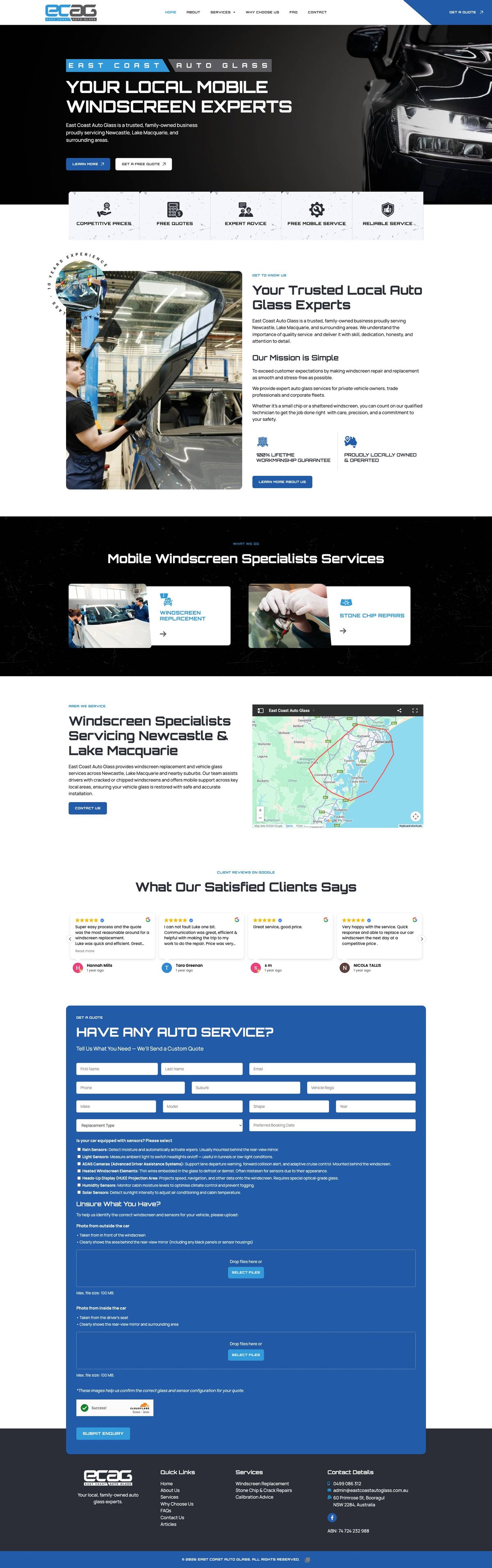
East Coast Auto Glass — Mobile and workshop windscreen repairs and replacements. The site makes it easy to get a quote and book in, whether you need a chip repair on the spot or a full windscreen replacement.
If someone you know would get something out of this, feel free to forward it. And just reply if you want to chat, I read every one.