The Tools You Loved Will Turn on You

Mailchimp used to be the easiest recommendation I could make.
Client says they want a newsletter? Mailchimp. Free up to 2,000 contacts. Nice templates. Easy to use. I set up or helped with over ten Mailchimp accounts for clients in the past two years alone. It was the answer to that question for a solid decade.
Then Intuit bought them in 2021, and the slow squeeze started.
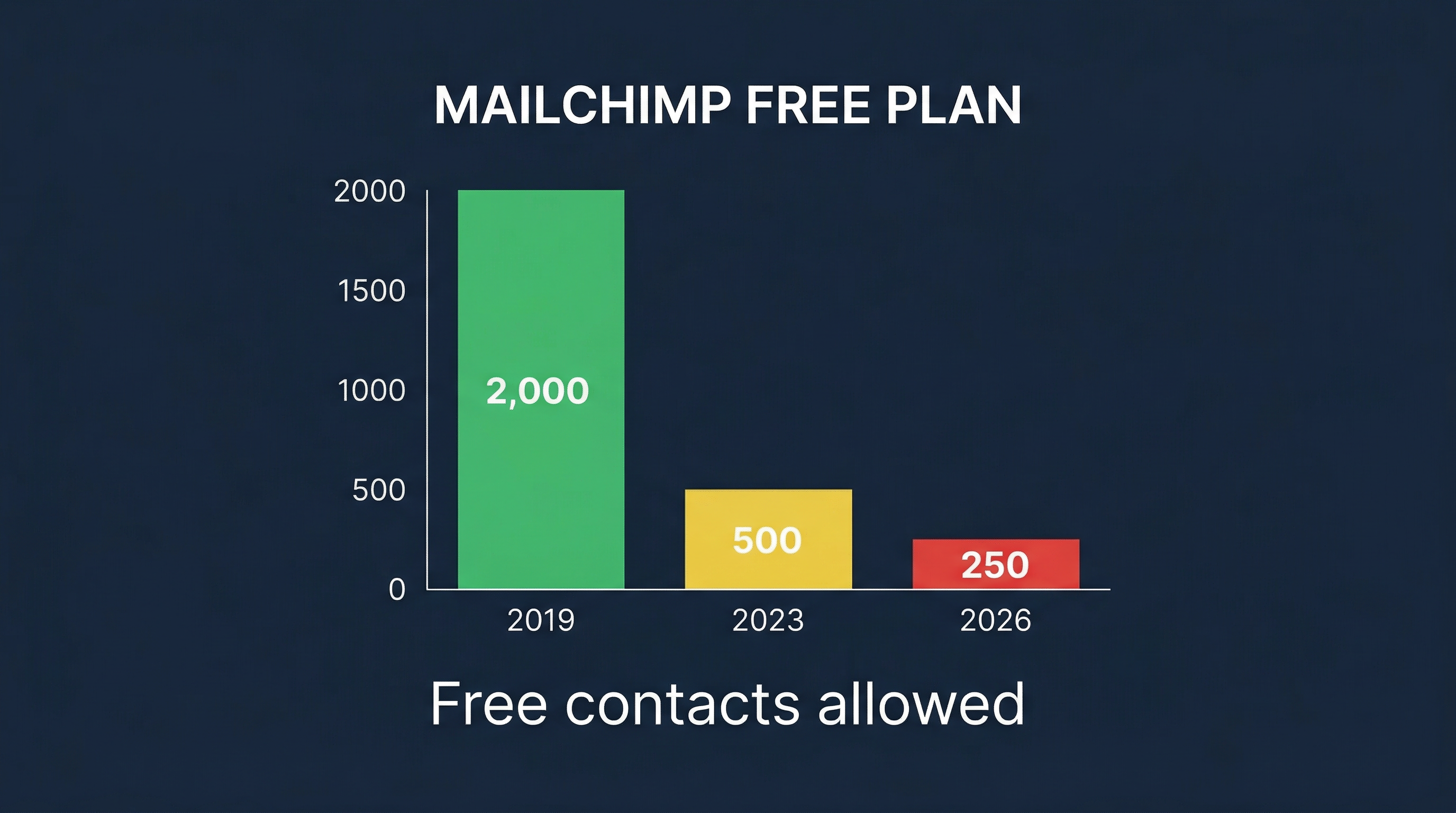
The free plan went from 2,000 contacts to 500. Then from 500 to 250. The monthly send limit dropped from 10,000 to 1,000 to 500.
Paid plans went up 20-30%. Features that used to be free got locked behind higher tiers.
And here's the one that really got me: they count your unsubscribed contacts toward your billing limit. People who've told you they don't want your emails? You're still paying for them. Unless you manually archive each one.
I went from "Mailchimp is great, just use Mailchimp" to "I will never touch Mailchimp again" in the space of about three years.
And it's not just Mailchimp.
LastPass was the password manager everyone recommended. LogMeIn bought it in 2015 for $110 million. Then a private equity firm bought LogMeIn.
The free tier got gutted. They dropped syncing across devices unless you paid. Then in 2022, attackers got in and took encrypted copies of everyone's password vaults. The company paid $24.5 million to settle the class action.
We moved to Bitwarden and never looked back.
Skype was so dominant it became a verb. "I'll Skype you." Microsoft paid $8.5 billion for it in 2011.
Then spent the next decade letting it rot while they built Teams. In May 2025 they shut it down entirely and herded everyone into Teams. From cultural icon to "please migrate your account" in fourteen years.
ClickUp was the project management tool I was genuinely excited about. Slick interface, generous free tier, everything in one place.
Then the screws started turning. Free plan limits got tighter. Pricing jumped. The way they handle "guests" versus "members" means you can accidentally trigger a paid seat just by assigning a task to someone. No warning, no confirmation. You find out when the bill arrives.
Podio is probably the saddest one for me. Citrix bought it in 2012 and it was brilliant at the time. Flexible, customisable, genuinely useful for running a business.
Then nothing happened. For years. Nine years after the acquisition they were still promising to "get back to investing in the UI." They never really did. A tool that could have been incredible just sat there gathering dust.
It's not just software tools either.
Google used to be a search engine. You typed a question, you got an answer. A 2018 study by UK agency Varn found that 60% of users couldn't tell the difference between a paid ad and an organic result. Google has made ads even harder to spot since then, removing coloured backgrounds and shrinking the "Sponsored" label to near-invisible.
That's not an accident. The line between paid and organic has been blurred so deliberately that the whole first screen is often ads wearing the same clothes as search results.
Amazon did the same thing. It used to be a place to find the best product. Now it's a place where the products that paid the most get shown first. Search for anything and you're scrolling past sponsored listings before you see what you actually came for.
Etsy followed the same playbook. It started as a marketplace for independent makers. Now Etsy takes over 21% of every sale, and once you earn over $10,000 you're permanently enrolled in their mandatory advertising program. You can't opt out.
The platform that was built to support small creators is now extracting a fifth of their revenue.
The pattern is always the same.
A company builds something people love. It grows because it's generous and good. A bigger company buys it, or the investors start demanding growth. The price goes up. The free tier shrinks. Ads creep in.
The thing you recommended to everyone becomes the thing you warn people about.
There's a word for this. Cory Doctorow calls it "enshittification." The Macquarie Dictionary made it their Word of the Year in 2024. The fact that we needed a word for it tells you something.
But something is shifting
Here's what I find interesting. AI is quietly making it possible for people to build their own things again.
It reminds me of the early web. Before social media swallowed everything, people had blogs. They had their own websites. They wrote in places they controlled. You didn't need Facebook's permission to publish something or Instagram's algorithm to decide who saw it.
Then the platforms came along and it was easier to post there. So we did. And slowly, we handed over control of our audience, our content, and our data to companies whose interests don't align with ours.
AI might be the thing that starts to reverse that. Not because it replaces the platforms overnight. They still have the distribution, and that matters. But it's lowering the bar for building your own thing in ways that would have seemed ridiculous two years ago.
We're already seeing it. Clients are turning up with sites they've built themselves using tools like Replit, Lovable, Bolt, and Base44. Are they polished? Not always. But they're often good enough to publish, and when they're not, they give us a solid starting point to rebuild from instead of starting with a blank page.
That's a meaningful shift. The gap between "I need a platform to do this for me" and "I can build something myself" is closing fast. And every time someone builds their own thing instead of renting space on a platform, that's one less person who'll get squeezed when the enshittification cycle kicks in.
What can you actually do?
Mostly, you switch. There are good alternatives to almost everything on this list.
For email newsletters, Brevo, MailerLite, and Moosend all have genuinely usable free tiers that don't charge you for unsubscribed contacts.
For password management, Bitwarden is open source and the free tier does everything most people need.
For project management, there are dozens of options depending on what you need, but the pattern is the same: check who owns it and how they make money before you commit.
The harder question is whether switching just resets the clock. You find the next good thing, it gets popular, it gets acquired, and the cycle starts again.
I have a different answer to that question, but it's a story for next time.
Worth Watching
Speaking of enshittification — someone made a video called "A Day in the Life of an Enshittificator." It's a parody of what it's like to work at a company whose entire job is making things worse. Painfully accurate and very funny.

Away from the Keyboard
Took the family to see the Back to the Future musical at the Sydney Lyric Theatre before it finished up. What struck me was how they updated the show for stage without wrecking what made the original great. The Libyans and the machine gun are gone. The DeLorean has voice control now. Goldie Wilson gets a proper production number. They changed what needed changing and kept what defined the experience.

Kind of the opposite of everything I just wrote about.
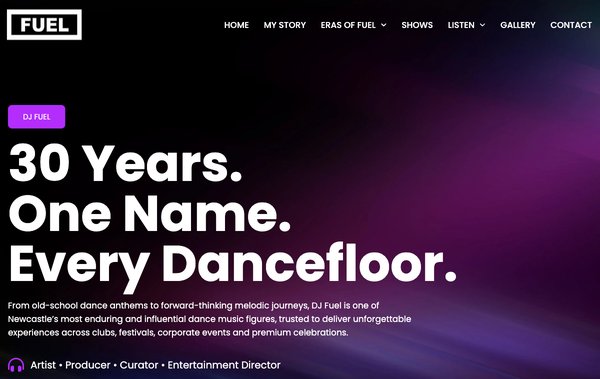
Fresh off the press: Here's a recent site we built for DJ Fuel, a Newcastle-based DJ and entertainment director with over 30 years behind the decks and multiple ARIA Club Chart releases. The site splits his work into three modes: Origins (90s/2000s nostalgia sets), Horizons (progressive club and festival sets), and Legacy (corporate events, weddings, functions). Worth a look if you like good design or good music.